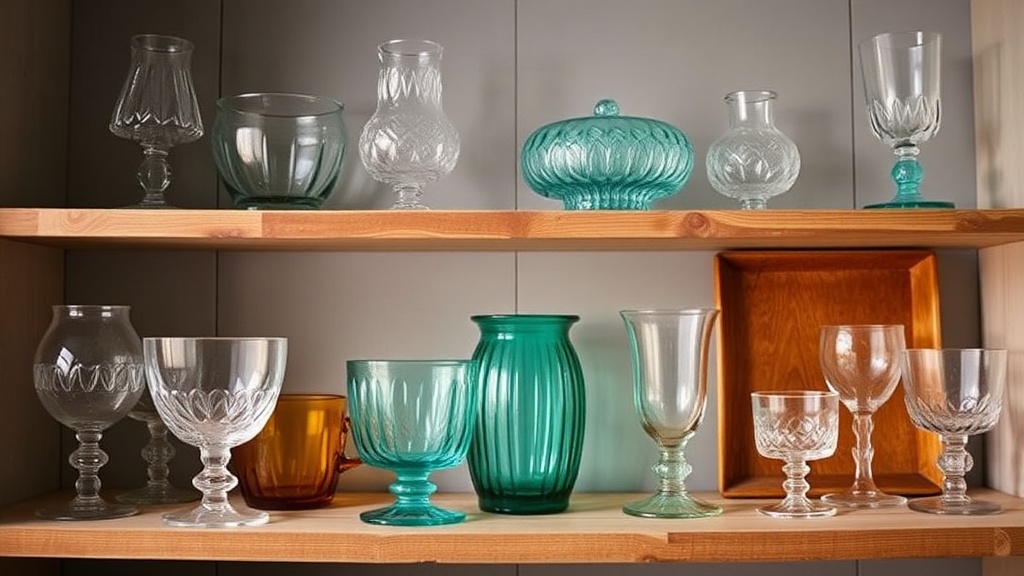
5 Ways to Use Thrifted Glassware to Style Your Shelves

Group by Color for a Gradient Effect
Mix Heights with Different Bottle Shapes
Use Glassware as Functional Vases
Create a Textured Centerpiece with Clear Glass
Layer Textures with Colored Glassware
You will learn how to select, group, and arrange thrifted glassware to create visual interest on your bookshelves, floating shelves, or kitchen cubbies. This guide focuses on using transparency, light refraction, and varying silhouettes to add depth to your home decor without cluttering your space.
Understand the Physics of Glass in Design
When styling with glass, you aren't just placing objects on a surface; you are managing light. Glass is a unique material because it occupies "negative space" differently than wood or ceramic. While a heavy stoneware pitcher creates a solid visual block, a clear glass carafe allows the eye to pass through it, making the shelf feel less crowded. This is a critical distinction when working with small shelves or tight corners where you want to avoid a cramped feeling.
To use glass effectively, you must consider three technical elements: refraction, transparency, and scale. Refraction occurs when light passes through the glass and bends, often creating beautiful patterns on the shelf behind it. Transparency dictates how much of the background is visible. Scale refers to the height and volume of the piece. A single, tall, slender glass bottle can provide a vertical line that draws the eye upward, while a low, wide glass bowl provides a horizontal anchor.
1. Create Visual Depth with Layered Transparency
One of the most effective ways to use thrifted glassware is to layer pieces of varying transparency to create a sense of depth. Instead of lining up objects in a single row, place shorter, more opaque or colored glass items in front of taller, clearer items. This creates a "foreground" and a "background" on your shelf, which adds professional-grade dimension to your display.
For example, if you find a set of vintage amber glass tumblers at a local thrift store, do not just place them in a line. Place a tall, clear glass apothecary jar in the back and nestle the amber glasses slightly in front and to the side. The amber glass will catch the light, but the clarity of the apothecary jar will ensure the shelf doesn't look "heavy." This technique is particularly useful if you are looking for ways to brighten a dark area, as the layered glass will bounce whatever ambient light is available throughout the room.
Pro Tip: When layering, ensure the heights are significantly different. A rule of thumb in architectural styling is to use the "Rule of Three" with varying heights—low, medium, and high—to ensure the eye moves naturally across the arrangement.
2. Use Glass as a Vessel for Organic Textures
Glass can often feel cold or clinical if it isn't paired with something organic. To soften the look of your shelves, use thrifted glassware as vessels for plants or natural elements. This introduces a contrast between the hard, smooth surface of the glass and the soft, irregular textures of nature. This method is a great way to use indoor plants to soften your living room or any other shelving unit in your home.
- Propagation Stations: Use mismatched vintage laboratory beakers or small glass bud vases to display plant cuttings. The visible roots in the water add a scientific, intentional aesthetic.
- Dried Botanicals: A large, clear glass jug or a wide-mouth carafe works perfectly for dried eucalyptus, pampas grass, or even architectural branches. The transparency of the glass keeps the focus on the texture of the plants.
- Textural Fillers: If you aren't using live plants, fill a large glass vessel with organic materials like smooth river stones, dried moss, or even wooden beads. This adds weight and a tactile quality to the shelf.
When choosing your vessels, look for "mouth width" compatibility. A narrow-neck bottle is best for a single stem, while a wide-mouthed jar is necessary for grouping multiple branches or voluminous dried elements.
3. Group by Color and Material Consistency
A common mistake when thrifting is buying pieces that are too disparate in style, which leads to a "cluttered" look rather than a "curated" one. To avoid this, choose a color story or a material theme. If you are drawn to colored glass, stick to a specific palette. A collection of cobalt blue glass, emerald green glass, and seafoam glass will look intentional, whereas a random assortment of bright red, yellow, and purple might look chaotic.
You can group your glassware in two ways:
- Monochromatic Grouping: Collect different shapes and sizes of glass, but ensure they are all the same color (e.g., all clear glass, or all amber glass). This emphasizes the silhouette of the objects rather than the color.
- Tonal Grouping: Collect pieces that sit near each other on the color wheel. For example, mixing clear glass with light blue and deep navy creates a sophisticated gradient effect that feels calm and structured.
When you group by color, you are essentially creating a "visual weight" anchor. A heavy, dark-colored glass piece should be placed toward the base or the side of a grouping to provide structural balance to the arrangement.
4. Incorporate Light and Reflection
Glass is a tool for light manipulation. If your shelves are located near a window or under a spotlight, you can use the refractive properties of glass to create movement. This is especially effective in dining areas or living rooms where you want a sense of "glow" without using heavy electrical fixtures.
Consider these specific setups:
- The Candle Method: Place tea lights or votives inside thrifted glass holders. The glass will magnify the flame and cast shadows, adding warmth to the shelf. Avoid using cheap plastic holders; stick to heavy-bottomed glass to prevent tipping and to ensure a better light refraction.
- The Water Effect: Filling clear glass vessels with water and a few submerged elements (like a single green leaf or a piece of citrus) creates a dynamic, living display. The water acts as a lens, magnifying the contents and adding a sense of freshness.
- The Reflective Backdrop: Place your glass items in front of a mirror or a metallic backsplash. The reflection will double the visual impact of the glassware, making the shelf appear deeper than it actually is.
5. Balance Volume with Negative Space
In architecture, we often talk about the importance of "voids." In interior design, this translates to negative space. When styling with glass, the biggest temptation is to fill every inch of the shelf. However, the beauty of glass lies in its ability to show what is behind it. If you crowd your glass pieces, you lose the very benefit they provide: the lightness.
To achieve a professional balance, follow these structural rules:
The 60/40 Rule: Aim for your objects (the glass, the plants, the books) to occupy roughly 60% of the shelf surface, leaving 40% as open, negative space. This prevents the shelf from looking like a storage unit and makes it look like a designed display.
Varying the Footprint: Do not use objects that all have the same footprint. If you have three glass jars, make sure one is wide and heavy, one is medium and tapered, and one is thin and tall. This variation in "footprint" ensures that the negative space between the objects is as interesting as the objects themselves. A gap between two thin bottles looks different than a gap between a large bowl and a small cup. Play with these gaps to create a rhythmic, balanced look.
By treating your thrifted glassware as architectural elements—considering their height, their ability to transmit light, and their physical volume—you move beyond simple decoration and into the realm of intentional design. Start small, focus on the light, and always leave room for the eye to breathe.