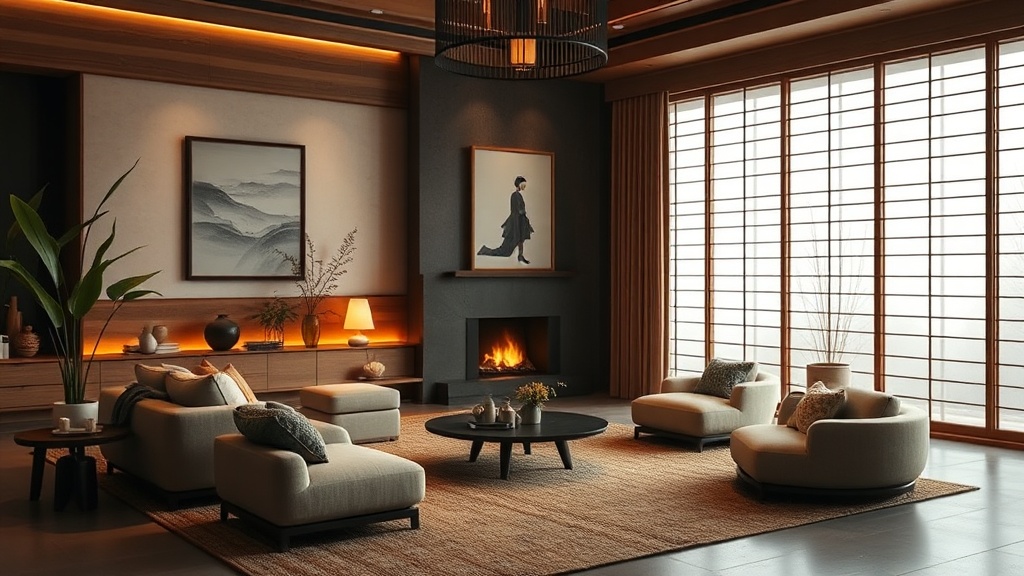
How to Master the 'Japandi' Aesthetic in Your Living Room

When I was working in high-rise architecture, I spent my days obsessing over steel skeletons and floor-to-ceiling glass. Everything was sharp, expensive, and—to be honest—a little cold. When I transitioned to van life and eventually to rescuing mid-century furniture, I realized that true luxury isn't about how much you can build; it’s about how much you can simplify without losing the soul of a space. This realization is exactly what defines the Japandi aesthetic.
Japandi is the intentional marriage of Japanese minimalism and Scandinavian functionality. It is the intersection of wabi-sabi (the beauty of imperfection) and hygge (the pursuit of coziness). In a living room, this means moving away from the cluttered "fast furniture" look and moving toward a space that feels structurally sound, organic, and deeply calm. If you want to master this look, you have to stop thinking like a decorator and start thinking like a designer: focus on the bones, the light, and the texture.
The Foundational Principles: Structure and Simplicity
Before you buy a single linen throw pillow, you need to understand the geometry of the room. In architecture, we talk about the "void"—the space that is left empty. In a Japandi living room, the void is just as important as the furniture. You aren't just leaving space empty; you are giving the room room to breathe.
The first rule is to prioritize low-profile furniture. Japanese design often keeps elements closer to the ground to create a sense of stability and connection to the earth. Look for sofas with low backs and wooden legs, or coffee tables that sit low to the rug. This keeps the sightlines open, making even a small living room feel expansive. This approach is a stark contrast to more decorative styles, such as creating a moody maximalist gallery wall, where the goal is often to fill the vertical space with visual interest. In Japandi, we let the walls rest.
Secondly, focus on functional intentionality. Every piece in your living room should serve a purpose. If a decorative object doesn't bring a sense of texture or a moment of calm, it shouldn't be there. This isn't about being a minimalist for the sake of being empty; it’s about being a curator of quality. Instead of five small trinkets, choose one large, hand-thrown ceramic vase with a single, sculptural branch.
The Color Palette: Earthy, Muted, and Sophisticated
A common mistake I see is people trying to use "beige" and ending up with a room that feels clinical or sterile. To avoid this, you must layer your neutrals. A Japandi palette is rooted in nature, which means you are looking at a spectrum of ochre, terracotta, sand, stone, and muted moss.
- The Base: Use soft whites or warm greys for your walls. Avoid the stark, blue-toned whites found in modern offices; you want a "warm" white that reacts beautifully to natural light.
- The Contrast: Introduce darker elements to provide structural weight. This could be a matte black metal floor lamp or a dark walnut side table. This provides the "architectural" edge that keeps the room from looking too soft.
- The Natural Tones: Incorporate the colors of the earth. Think of the way sunlight hits a clay pot or a weathered piece of wood.
When working with these muted tones, lighting becomes your most critical tool. You cannot rely on a single overhead light, which tends to flatten the depth of a room. To truly master the atmosphere, you must understand the golden rule of layered lighting. Use a combination of ambient, task, and accent lighting—specifically using warm-toned bulbs—to create soft shadows and highlights that dance across your textured surfaces.
Materiality: The "Grit" and the "Grace"
In my design lab, I always tell people: if it doesn't have a tactile quality, it’s not finished. In a Japandi space, texture is what replaces color as the primary source of interest. You want to mix materials that feel "real." If you are buying a rug, skip the synthetic polyester and go for jute, sisal, or high-quality wool. If you are choosing a coffee table, look for solid wood with visible grain rather than a veneer.
Natural Wood and Stone
Wood is the heartbeat of this aesthetic. However, don't feel restricted to just one type. You can mix the light, airy tones of Scandinavian ash or pine with the deeper, more grounded tones of Japanese cedar or walnut. The key is to ensure the finishes are matte or satin—avoid high-gloss finishes, which feel too "artificial" for this style. Stone, too, plays a massive role. A heavy travertine tray or a basalt candle holder adds a sense of permanence to a coffee table.
Textiles and Softness
To prevent the room from feeling too "hard" or museum-like, you must introduce soft textures. Linen is the king of Japandi textiles. A linen sofa cover or linen drapery adds a relaxed, organic drape that softens the straight lines of your furniture. This balance of hard and soft is essential. It’s the same principle used in biophilic design elements, where we use natural textures to bridge the gap between the built environment and the natural world.
Bringing the Outdoors In: Biophilic Integration
You cannot have Japandi without greenery, but there is a specific way to approach it. We aren't looking for a jungle; we are looking for a curated botanical presence. The goal is to bring a sense of the outside world into your living space to promote a sense of well-being.
Instead of a cluster of small, mismatched potted plants, try a single, striking specimen. A tall, architectural Ficus lyrata (Fiddle Leaf Fig) or a sculptural Dracaena can act as a living piece of art. If you prefer something more subtle, use dried elements like branches or tall grasses in ceramic vessels. This keeps the energy of the room calm and low-maintenance.
This connection to nature isn't just about aesthetics; it's about how our environment affects our internal rhythms. Just as we look to optimize our living spaces for peace, we must also optimize our bodies. For instance, many of my clients find that aligning their environment with their biological needs—such as following a circadian-aligned eating plan—helps harmonize their indoor lifestyle with the natural world.
The DIY Approach: Building Your Own Japandi Pieces
As someone who loves a good tool, I don't want you to just go out and buy a "Japandi-style" set. I want you to build or modify pieces that have character. You can take a standard, mass-produced wooden side table and give it a high-end, Japandi makeover with a few simple steps:
- Sand it down: Remove any heavy lacquer or shiny finishes. You want the wood to feel raw and organic.
- Re-stain or Oil: Use a matte wood oil or a light white-wash stain to achieve that Scandinavian lightness, or a dark walnut oil for a more Japanese-inspired look.
- Simplify the Hardware: If the piece has ornate handles, replace them with something incredibly simple—perhaps a recessed wooden pull or even nothing at all.
This process of "rescuing" furniture is incredibly rewarding. It teaches you to respect the structural integrity of the piece while stripping away the unnecessary. It’s about finding the essence of the object, much like how we approach eco-friendly and zero-waste decor, where the focus is on longevity and natural materials rather than disposable trends.
Final Thoughts: The Art of Slow Living
Mastering the Japandi aesthetic is not a weekend project; it is a mindset. It is a commitment to quality over quantity and a rejection of the "more is more" culture. When you sit in your living room at the end of the day, you shouldn't feel overwhelmed by your belongings. You should feel a sense of stillness.
Whether you are starting from scratch or slowly evolving your current space, remember to focus on the math of the room: the proportions of the furniture, the layers of the light, and the texture of the materials. Build a space that respects the structure, honors the natural world, and—most importantly—provides you with a sanctuary of calm.