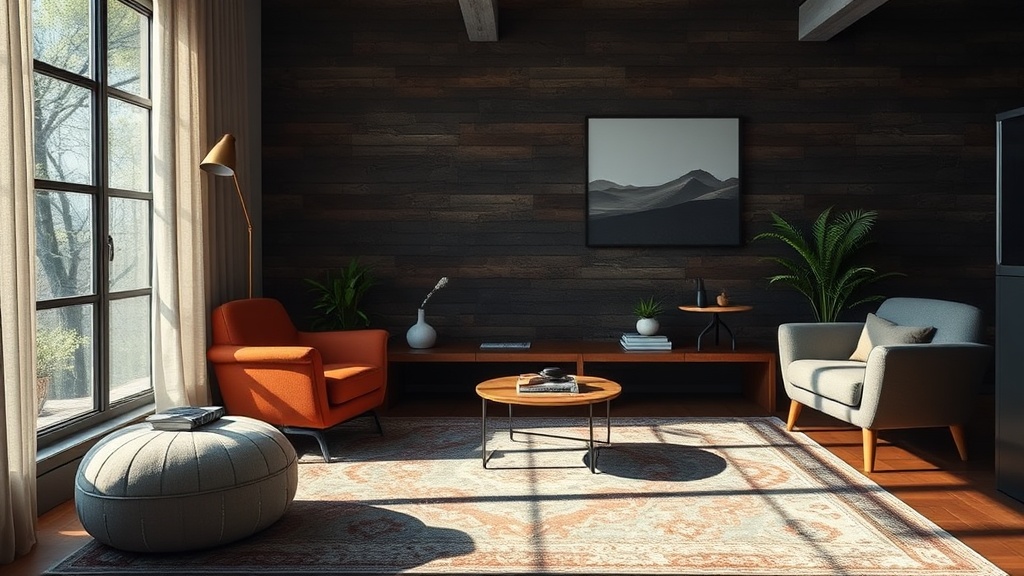
How to Choose the Right Rug Size for Your Space

Approximately 80% of interior designers agree that a poorly sized rug is the single most common mistake in residential design. A rug that is too small doesn't just look "off"—it visually shrinks your room, makes your furniture look disjointed, and creates a sense of structural instability in the space. This guide provides the mathematical frameworks and spatial rules required to select the correct rug dimensions for every major room in your home, ensuring your floor coverings anchor your furniture rather than floating aimlessly within it.
The Fundamentals of Spatial Proportions
In architecture, we look at the relationship between a footprint and the objects resting upon it. A rug serves as the "foundation" for a furniture grouping. When you select a rug, you aren't just buying a piece of fabric; you are defining the boundaries of a functional zone. If the rug is too small, the furniture appears to be "floating" in a sea of hardwood or tile, which breaks the visual flow of the room.
To avoid this, you must move away from "eyeballing" it. Instead, use a tape measure and painter's tape. Before purchasing anything, map out the dimensions on your floor using 1-inch wide blue painter's tape. This allows you to see the actual footprint of the rug in relation to your existing furniture and walkways without the commitment of a purchase.
Living Room Layout Strategies
The living room is often the most complex space because of the sheer volume of furniture. Your choice of rug size depends entirely on your seating arrangement. There are three primary "architectural" approaches to living room rug placement.
The All-In Approach (Full Coverage)
In this configuration, every piece of furniture in the primary seating group—the sofa, the accent chairs, and perhaps even the side tables—sits entirely on top of the rug. This is the most formal and cohesive method. It works exceptionally well in large, open-concept great rooms where you need to create a distinct "island" of comfort. For a standard large living room, you are likely looking at a 9x12 or 10x14 rug. This method provides maximum stability and prevents the "floating furniture" look entirely.
The Front-Legs-Only Approach (The Standard)
This is the most common professional standard. In this setup, the front legs of your sofa and all accent chairs rest on the rug, while the back legs and any coffee tables sit on the bare floor. This creates a sense of connection between the pieces without requiring a massive, expensive rug. A 8x10 rug is usually the minimum requirement for this method in a medium-sized room. This approach helps ground the seating group while still allowing the floor material to be visible around the perimeter, which keeps the room feeling airy.
The Floating Coffee Table Approach (The Minimalist)
In this scenario, only the coffee table sits on the rug, and the seating surrounds it without touching the rug at all. While this is a common mistake made by people buying small "accent rugs," it can be a deliberate design choice in very small apartments or minimalist spaces. However, use caution: if the rug is too small for the coffee table, it will look like a bath mat. If you choose this path, ensure the rug is large enough to extend at least 6 to 12 inches beyond the edges of the coffee table.
Once you have your rug sized correctly, you can focus on the details of the center of the room. If you are struggling with the aesthetics of your central pieces, check out my guide on how to style a coffee table like a professional designer.
Dining Room Dimensions and Clearance
Dining rooms require a different set of mathematical rules because they involve movement. A rug in a dining room must account for the "chair pull-out" factor. If a rug is too small, the back legs of your chairs will catch on the edge of the rug every time someone attempts to sit down or stand up. This is not just a design flaw; it is a tripping hazard and a source of constant friction that can damage both the rug and the chair legs.
The Golden Rule of Dining Room Rugs: The rug should extend at least 24 to 30 inches beyond the edge of the table on all sides. This ensures that even when a guest is fully seated and the chair is pushed out, all four legs of the chair remain on the rug.
- For a Rectangular Table: Measure the length and width of the table, then add 4 feet to both dimensions (2 feet on each side).
- For a Round Table: Measure the diameter and add at least 4 to 5 feet to the total diameter to ensure clearance.
- For a Square Table: Apply the same 24-30 inch rule to all four sides to maintain symmetry.
Bedroom and High-Traffic Area Rules
In a bedroom, the rug's job is to provide a soft landing for your feet when you step out of bed. The placement depends on the size of your bed and whether you use a bed frame with a headboard or a footboard.
The King or Queen Bed Layout
For a Queen or King-sized bed, the most effective method is to place a large rectangular rug (typically 8x10 or 9x12) horizontally across the bottom two-thirds of the bed. The rug should start a few inches below the nightstands and extend well past the foot of the bed. This creates a wide, comfortable zone for walking around the bed. Avoid placing a small runner at the foot of the bed; it often looks like an afterthought rather than a deliberate design element.
The Hallway and Entryway Scale
Hallways and entryways are high-traffic zones that require durability and correct scale. A runner that is too narrow will make the hallway feel cramped and "tunnel-like." A runner that is too long without a break in the visual pattern can feel monotonous. Aim for a runner that covers about 75% of the hallway length, leaving a bit of the floor visible at the start and end to prevent the space from feeling "choked."
Common Mistakes to Avoid
Even with a tape measure in hand, it is easy to fall into these common pitfalls:
- Ignoring the "Walkway" Clearance: Always leave at least 12 to 18 inches of bare floor between the edge of your rug and the walls or other heavy furniture (like a sideboard or media console). If the rug touches the baseboards, the room will feel cluttered and the scale will be completely off.
- Buying Based on Color Rather Than Size: A beautiful pattern in a perfect color will not save a room if the rug is a 5x7 in a 12x15 room. The scale is the foundation; the color is the decoration.
- Forgetting the Rug Pad: A rug without a pad is a safety hazard and a structural weakness. A rug pad adds a layer of "grip" and prevents the rug from bunching, which preserves the shape of the rug over time. For high-traffic areas, use a felt or rubberized pad to add thickness and sound dampening.
The Math Cheat Sheet
If you are in a showroom and can't visualize the space, use these quick reference formulas:
| Room Type | Primary Goal | Minimum Dimension Rule |
|---|---|---|
| Living Room | Anchor Seating | Front legs of all seating on rug |
| Dining Room | Chair Clearance | 24-30 inches beyond table edge |
| Bedroom | Soft Landing | Extend 2-3 feet past foot of bed |
| Entryway | Define Transition | 75% of hallway length |
By applying these architectural principles of scale and proportion, you move beyond simple decorating and into the realm of intentional design. Measure twice, tape once, and always prioritize the functional footprint of your furniture over the aesthetic of the rug itself.