How to Style a Coffee Table Like a Professional Designer

A client once sat in a living room that featured a high-end, $3,000 walnut coffee table, yet the room felt cluttered and unfinished. The reason wasn't the furniture; it was a pile of mismatched coasters, a half-empty box of tissues, and a single, lonely remote control sitting directly on the wood. This post explains how to use scale, texture, and structural layering to transform your coffee table from a landing strip for clutter into a curated focal point that anchors your living space.
The Foundation: Understanding Scale and Proportion
Before you buy a single decorative object, you must understand the math of your space. A common mistake is choosing accessories that are either too small—making the table look cavernous—or too large, which makes the table look cramped. A well-styled table requires a hierarchy of heights.
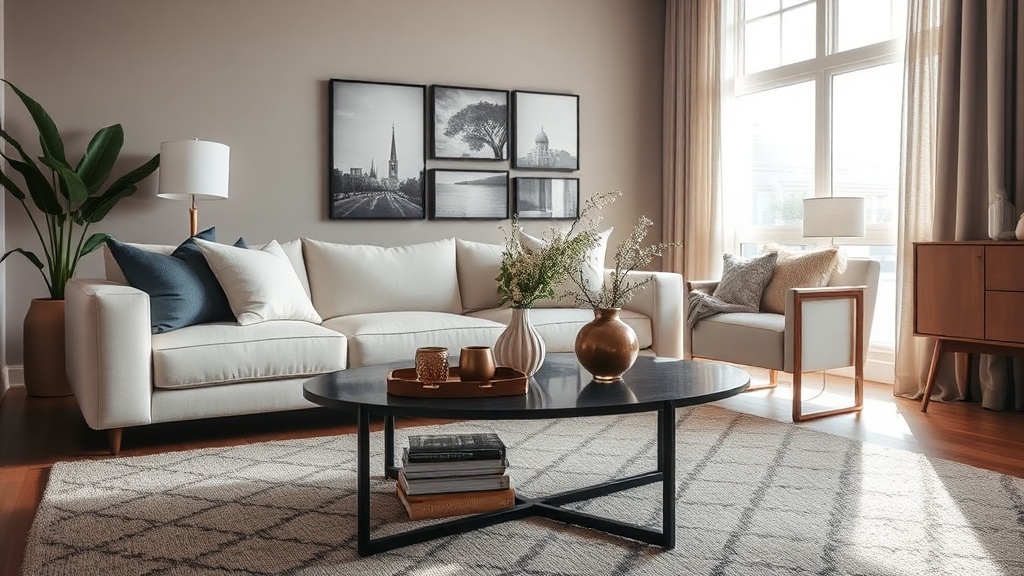
Think of your coffee table in terms of three distinct levels: low, medium, and high. The low level consists of items that sit flat, such as books or a tray. The medium level includes objects like small bowls or ceramic vessels. The high level is reserved for your statement pieces, such as a tall vase with branches or a sculptural candlestick. If every item on your table is the same height, the eye has nowhere to travel, and the arrangement feels static and uninspired.
The Rule of Three and Odd Numbers
In design, grouping objects in odd numbers—specifically groups of three or five—is more visually stimulating than even numbers. Even numbers create symmetry that can feel too formal or "perfect," whereas odd numbers create a sense of organic movement. When arranging your items, try grouping a tall object, a medium object, and a low object together. This creates a visual triangle that guides the eye through the composition.
The Anchor: Using Trays and Books
A tray is the most effective tool for organizing a coffee table. It provides a defined boundary for your smaller items, preventing them from looking like they are "drifting" across the surface. Without a tray, a collection of small objects can easily look like clutter. A tray acts as a structural frame that tells the eye, "These items belong together."
- Material Choice: For a modern look, use a matte black metal tray or a concrete tray. For a warmer, organic feel, opt for a woven seagrass tray or a weathered wooden dough bowl.
- Dimensions: Ensure your tray occupies roughly one-third to one-half of the total surface area. If it covers more, it will overwhelm the table; if it covers less, it will look lost.
Books are the secondary anchor. In professional staging, we use "coffee table books" not just for reading, but as pedestals. A thick, hardcover book provides the necessary height to elevate a small decorative object. If you have a small brass object that looks insignificant on its own, place it on top of a stack of two large art books. This adds a layer of architectural depth. If you find yourself working with a piece of furniture that has a worn finish, you might first want to learn how to make your old coffee table look new again before investing heavily in expensive decor.
Adding Life: Greenery and Organic Elements
A coffee table without a living element often feels sterile. Incorporating greenery introduces texture and a sense of time (growth). However, the way you use plants matters. Avoid small, cluttered succulents which can look "busy." Instead, go for one significant botanical element.
The Branch Method: Instead of a standard bouquet of flowers, which can look dated, use a single architectural branch. A branch from a Magnolia tree or even a dried Eucalyptus stem provides height and a sculptural silhouette without the maintenance of a full floral arrangement. This works particularly well in minimalist or mid-century modern settings.
The Vessel: The container is just as important as the plant. A heavy stoneware crock provides a sense of weight and stability, while a clear glass vessel highlights the stems and water, adding a sense of lightness. If you are worried about keeping your greenery alive, ensure you understand the basics of plant care, as even a decorative plant needs the right environment to look its best.
Texture and Material Contrast
To prevent a tabletop from looking "flat," you must mix textures. If your coffee table is a smooth, polished surface like marble or glass, you need to introduce organic, rougher textures to balance it. If your table is a heavy, rustic wood, you should introduce sleek, man-made materials.
Consider these pairings for high-contrast styling:
- Smooth vs. Rough: A polished marble tray paired with a textured ceramic bowl.
- Hard vs. Soft: A heavy metal object paired with a stack of linen-bound books.
- Shiny vs. Matte: A brass candle holder paired with a matte black tray.
This interplay of light and shadow is what creates "dimension." When light hits a matte surface, it absorbs it; when it hits a metallic surface, it reflects it. This variation keeps the eye engaged as you move through the room.
Functional Styling: The Practicality Factor
A coffee table is a functional piece of furniture. It is meant to hold a cup of coffee, a book, or a remote. Professional styling does not mean making the table unusable. You must build in "negative space"—the empty areas of the table that allow for actual human use.
The Remote Control Dilemma: Never leave remotes loose on the table. Instead, place them inside a decorative box or a small basket. This hides the plastic and wires, keeping the aesthetic clean while maintaining accessibility. Similarly, a small stone or ceramic coaster is much more sophisticated than a stack of paper napkins or a bare tabletop.
The Scent Element: A high-quality candle or a small vessel of incense adds an invisible layer of design. Scent influences how a room feels. A heavy, woodsy scent works well in a room with leather furniture and dark wood, while a citrus or light floral scent complements a bright, airy living room with linen upholstery.
Common Mistakes to Avoid
Avoid these frequent design pitfalls to keep your styling professional:
- The "Clutter Trap": Do not try to use every decorative item you own. It is better to have three high-quality, impactful objects than ten small, inexpensive ones.
- Ignoring the Center: Many people focus only on the edges of the table. Ensure the center of the table has a focal point, whether it's a large bowl or a stack of books.
- Lack of Verticality: If everything on your table is under six inches tall, the table will look like a flat plane rather than a curated display. Always include at least one item that breaks the horizontal line.
- Over-Symmetry: While symmetry is a tool, a perfectly symmetrical coffee table can feel like a museum exhibit rather than a home. Use "asymmetrical balance"—where one large object on one side is balanced by several smaller objects on the other.
Summary Checklist for Styling
Before you step back to view your work, run through this quick checklist to ensure your arrangement meets professional standards:
- Do I have a clear hierarchy of heights (low, medium, high)?
- Is there a tray or a book acting as an anchor for smaller items?
- Have I incorporated a variety of textures (smooth, rough, shiny, matte)?
- Is there enough negative space for someone to actually set down a drink?
- Does the arrangement feel balanced, even if it isn't perfectly symmetrical?