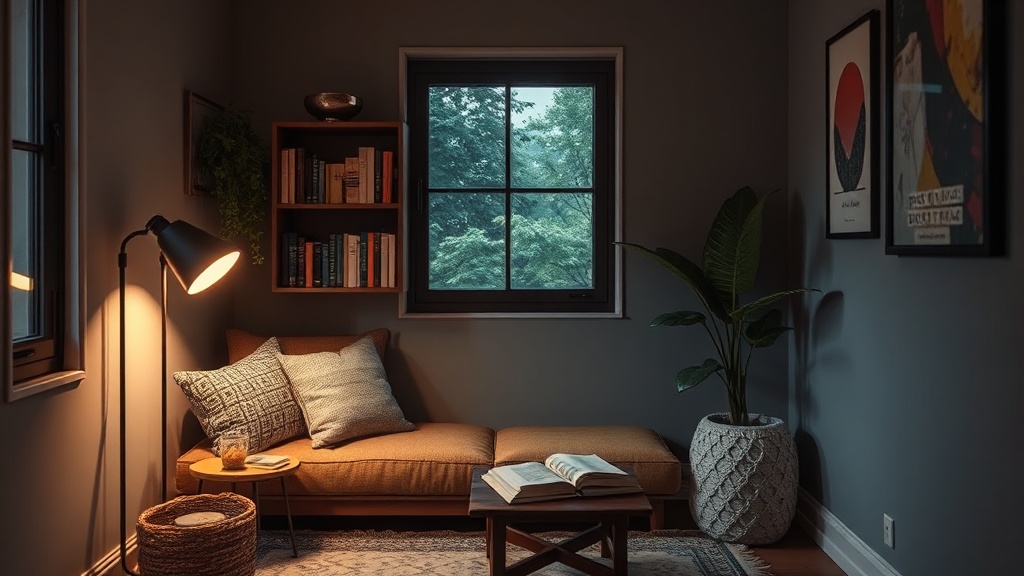
Design a Cozy Reading Nook in Any Small Corner

A corner that currently holds nothing but a dusty floor lamp or a stack of unused folding chairs is a wasted opportunity for architectural interest. A reading nook is more than just a comfortable chair; it is a deliberate structural intervention designed to provide psychological sanctuary within a larger room. This guide provides the technical steps and design principles required to transform a neglected corner into a high-functioning, cozy retreat using precise measurements, lighting layers, and intentional material selection.
Identify Your Footprint and Spatial Constraints
Before purchasing a single piece of furniture, you must perform a site analysis of your corner. Most people fail because they buy a chair based on a photo and realize too late that the clearance for the door or the walkway is insufficient. Use a piece of blue painter's tape to outline the footprint of your intended seating area directly on the floor. This allows you to visualize the actual volume the furniture will occupy in the three-dimensional space.
Measure three critical dimensions: the width of the corner angle, the depth of the area before it hits a high-traffic pathway, and the vertical clearance. If your corner is located under a low-slung ceiling or a structural beam, you must account for the "headroom" factor. You do not want to feel claustrophobic; you want to feel cocooned. If the ceiling is low, opt for a low-profile armchair rather than a high-backed wing chair to maintain a sense of openness.
Calculating the Clearance Zone
- The 36-Inch Rule: Ensure there is at least 36 inches of walking space around your new nook to prevent the area from feeling like an obstacle in the room.
- The Reach Radius: Sit in your intended chair and reach outward. Can you reach a side table or a built-in ledge without standing up? A functional nook requires a surface within an 18-to-24-inch reach.
- The Sightline Test: Stand in the center of the room. Does the nook look like a purposeful design element, or does it look like a piece of furniture that was shoved into a corner?
Select Seating Based on Ergonomics and Scale
The chair is the structural anchor of your nook. In professional interior design, we look at the "weight" of the furniture. A heavy, overstuffed leather club chair will dominate a small room and might make a tiny corner feel cramped. A mid-century modern lounge chair with tapered legs creates "visual air" because you can see the floor underneath it, making the room feel larger.
When selecting your seat, prioritize the angle of the backrest. For long-form reading, a slight recline (about 105 to 110 degrees) is more ergonomic than an upright dining chair. If you are working with an extremely tight footprint, consider a "chair-and-a-half" model. These are wider than a standard armchair but narrower than a small loveseat, offering extra room for a pillow or a small book without the bulk of a full sofa.
If you are a DIYer with basic woodworking tools, you can skip the retail markup and build a custom built-in bench. A built-in bench utilizes the corner's geometry more efficiently than freestanding furniture. You can use 2x4 framing and high-quality plywood to create a sturdy base, then finish it with a custom foam cushion upholstered in a durable fabric like heavy linen or velvet. This approach turns a piece of furniture into a permanent architectural feature of the home.
Layer the Lighting for Task and Ambience
Standard overhead lighting is the enemy of a cozy reading nook. It creates harsh shadows and flattens the depth of the space. To create a true sanctuary, you must implement a two-layer lighting strategy: task lighting and ambient lighting.
Task Lighting: This is the light that actually illuminates your pages. A dedicated floor lamp with an adjustable neck, such as a pharmacy-style lamp, is ideal. The light source should be positioned to the side of your dominant hand to minimize shadows cast by your body. If you are building a custom nook, consider installing a hardwired sconce. A swing-arm sconce provides high-intensity light when needed but can be tucked away when you want to relax.
Ambient Lighting: This provides the "glow" that makes the corner feel separate from the rest of the room. Use a small, dimmable table lamp or even a battery-operated LED candle on a nearby shelf. If you want to add texture to the light, look for shades made of linen or pleated fabric, which diffuse the light softly across the walls. This creates a "pool" of light that defines the boundaries of your nook.
Integrate Vertical Storage and Surfaces
A reading nook without a surface for a beverage or a book is merely a chair. However, a bulky end table can eat up your precious floor space. The most efficient way to add utility is through verticality. By using the wall space above your seating, you keep the floor clear and the design feeling intentional.
I highly recommend building a custom floating shelf system to serve as your side table. Unlike a standard bookshelf, a floating shelf can be mounted at a specific height to act as a cantilevered desk or a landing pad for a coffee mug. When you build a custom floating shelf, you are utilizing the structural integrity of your wall studs to create a surface that appears to hover, maintaining the lightness of the corner.
Types of Surface Solutions
- The C-Table: A small, lightweight table with a base that slides under the chair. This is perfect for tight spaces where a traditional side table won't fit.
- Floating Ledges: Thin, minimalist shelves that can hold a single book or a small ceramic tray.
- Wall-Mounted Swing Arm Shelves: These provide a sturdy surface that can be moved closer to you as you settle into your reading position.
Apply Texture and Materiality for Depth
In a small corner, you cannot rely on large-scale decor to create interest. Instead, you must use "micro-textures." This is where you move from a basic functional space to a high-end designed environment. Texture adds a sense of weight and comfort that visual patterns alone cannot achieve. If you are looking to upgrade your space with layered textures, these principles apply directly to your reading nook as well.
Start with the base layer: the chair upholstery. A tactile fabric like bouclé, velvet, or heavy cotton twill provides a sense of luxury. Next, add the soft goods. A high-quality throw blanket in a chunky knit or a weighted wool adds a layer of warmth and visual weight. For the pillows, mix your textures. Pair a smooth silk pillow with a rougher, textured linen pillow to create a sophisticated, multi-dimensional look.
Don't forget the floor. A small, circular jute rug or a plush sheepskin rug can "ground" the nook. A rug serves as a visual boundary, telling the brain that this specific square footage is a different zone than the rest of the room. In a small corner, a round rug is often better than a rectangular one, as it softens the harsh angles of the walls and creates a more organic, inviting shape.
The Final Technical Checklist
Before you consider the project complete, run through this final checklist to ensure your design is both beautiful and functional:
- Check the Cord Management: If you have a lamp, ensure the cord is not a tripping hazard. Use adhesive cord clips to run the wire neatly along the baseboard or behind the chair leg.
- Verify the Light Temperature: Ensure your bulbs are "Warm White" (approximately 2700K). Avoid "Daylight" or "Cool White" bulbs, which can feel clinical and harsh in a relaxation space.
- Test the Ergonomics: Sit in the chair for at least 20 minutes. Do you feel a strain in your neck? Is the lamp too bright? Is the table too far away? Adjust based on real-world usage, not just aesthetics.
- Assess the Soundscape: Does the corner feel too "echoey"? If so, add more soft surfaces like heavy drapes or a larger rug to dampen the sound and enhance the feeling of seclusion.
Designing a reading nook is an exercise in precision. By treating a small corner with the same architectural respect as a full-scale room, you create a space that is not just a place to sit, but a highly engineered environment for rest and focus.