7 Ways to Use Thrifted Glassware for Better Decor

The Minimalist Bud Vase Collection
A Textured Apothecary Display
Kitchen Spice Jar Organization
Floating Candle Holders
The Statement Beverage Pitcher
Bathroom Vanity Accents
Garden Terrarium Jars
Most people assume that thrifted glassware is either "cluttered junk" or strictly for functional kitchen use. They see a mismatched set of amber Depression glass or a dusty crystal decanter and think it belongs in a box in the garage. This is a mistake. Glass is one of the most versatile architectural elements in interior design because it manipulates light, creates visual depth, and adds a sense of transparency that prevents small spaces from feeling cramped. Using high-quality, vintage glass in your decor isn't just about recycling; it is about using light refraction and material weight to elevate your room's aesthetic. This guide explores seven practical ways to integrate thrifted glassware into your home to create professional-grade design layers.
1. Create a Sculptural Centerpiece with Grouped Vessels
One of the most effective ways to use glassware is to treat it as a sculptural element rather than a single functional object. Instead of placing one lonely vase in the middle of a dining table, create a "cluster" of varying heights and textures. This technique adds structural interest and prevents the table from looking flat.
When sourcing at thrift stores like Goodwill or local estate sales, look for a trio of vessels that share a common design language but differ in scale. For example, pair a tall, slender emerald green glass bottle with a medium-sized ribbed amber vessel and a low, wide clear glass bowl. The key is the rule of three: odd numbers are more visually stimulating to the human eye. To ensure stability, place the heaviest, widest vessel in the center or slightly offset to act as an anchor. This method works exceptionally well when styling a coffee table like a professional designer, as it adds the necessary verticality to break up the horizontal plane of the tabletop.
2. Use Colored Glass to Manipulate Ambient Light
Glass is a tool for light manipulation. If your living room feels sterile or lacks warmth, you can use colored glass to cast subtle, colored shadows across your surfaces. This is a low-cost way to introduce "mood lighting" without installing new electrical fixtures.
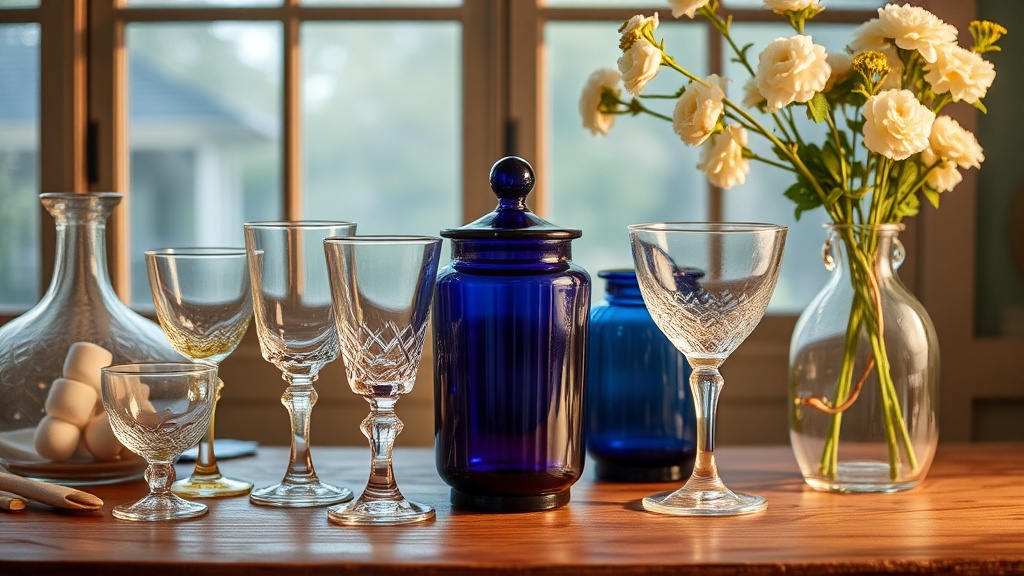
Search for heavy, thick-walled glass items such as vintage cocktail coupes or heavy decanters in jewel tones like sapphire, ruby, or amethyst. Place these near a window where natural sunlight can hit them, or near a lamp. As the light passes through the colored medium, it creates a soft glow on your surfaces. If you are working with a dark, moody office or a dining room with low light, choose warm tones like amber or ochre to add a sense of "golden hour" warmth throughout the day. This technique relies on the refractive index of the glass, so higher-quality, leaded crystal will often cast more dramatic, complex light patterns than cheaper, thin-walled glass.
3. Elevate Your Entryway with a Functional Glass Tray
The entryway is often a high-traffic zone where clutter accumulates. A common design mistake is letting keys, mail, and sunglasses sit directly on a wooden console table, which can scratch the finish over time. Instead, use a large, vintage glass tray to define a "landing zone."
Look for heavy glass platters or large, shallow apothecary bowls. A heavy glass tray provides a structural boundary that tells the eye exactly where the "organized chaos" lives. Not only does this protect your furniture from scratches, but the transparency of the glass keeps the entryway feeling open. If you have a dark wood console, a clear or frosted glass tray will provide a sharp, modern contrast. For a more organic look, a textured or etched glass tray can hide minor debris or dust better than a perfectly smooth surface, maintaining a clean aesthetic with less frequent maintenance.
4. Transform Apothecary Jars into Organized Storage
In a kitchen or a bathroom, glass is the ultimate tool for organized transparency. Rather than using plastic bins that look cheap and opaque, use vintage apothecary jars to turn mundane items into design features. This works because it utilizes "visual weight" to make storage look intentional rather than messy.
In a bathroom, use clear glass jars with airtight lids to hold cotton rounds, bath salts, or even high-end soaps. In a kitchen, use mismatched glass canisters to store dry goods like pasta, coffee beans, or even decorative spices. The trick to making this look professional rather than "shabby chic" is consistency in the base. If you are using various shapes, try to stick to a single color family—such as all clear glass or all milk glass—to create a cohesive, curated look. This adds a sense of architectural order to your shelving or countertops.
5. Use Glassware as a Brutalist Vase Base
If you have a large, heavy floral arrangement that feels unbalanced, you can use thrifted glassware to create a "pedestal" effect. This is a common trick used in high-end staging to add height and drama to a centerpiece.
Find a wide, heavy-bottomed glass bowl or a sturdy glass pedestal dish. By placing your floral arrangement—or even a large architectural branch—into a vessel that has significant weight, you create a sense of permanence and stability. For a modern, brutalist look, use thick, heavy-set glass cylinders. This provides a sturdy base for large-scale greenery like Monstera leaves or Eucalyptus. When working with heavy stems, the weight of the glass is crucial; thin, cheap glass will tip over easily under the weight of a large botanical arrangement. Always test the center of gravity before committing to a design.
6. Create a Layered Texture with Glass Cloches
A glass cloche (or a bell jar) is a powerful tool for highlighting a single, specific object. If you have a small item that is beautiful but lacks scale—such as a vintage watch, a unique stone, or a piece of driftwood—placing it under a cloche instantly elevates its status from "trinket" to "artifact."
The cloche adds a layer of protection and a sense of "museum-quality" presentation. To avoid the look of a cluttered antique shop, use the cloche sparingly. One or two well-placed cloches on a bookshelf or a mantel are much more effective than a dozen scattered around. The glass creates a micro-environment that draws the eye inward, focusing the viewer's attention on the texture and detail of the object inside. This is an excellent way to display seasonal items, such as a collection of pinecones in the winter or dried citrus slices in the autumn, adding a tactile, layered quality to your decor.
7. Incorporate Glass into Your Shelving Styling
Shelving can easily become a "dead zone" if it is only filled with books or opaque ceramics. Glassware allows you to play with the concept of negative space. By placing glass objects on your shelves, you allow the eye to travel through the object to the items behind it, preventing the shelving unit from feeling like a solid wall of objects.
When styling your bookshelves, use a mix of "solid" and "void" objects. A stack of linen-bound books provides a solid, matte texture, while a set of clear glass spheres or a translucent glass vase provides a "void" that lets light pass through. This creates a sense of depth and airiness. If you have open shelving in a kitchen or a living area, use tinted glass—such as smoke gray or seafoam green—to add a subtle pop of color that doesn't overwhelm the space. This layering technique is what separates a room that looks "lived in" from a room that looks "professionally designed."
"Design is not just about what you add to a room; it's about how the materials you choose interact with the light and the space around them."
Whether you are hunting at a local thrift store or a large-scale liquidator, remember to look for weight, clarity, and structural integrity. Glass is a high-performance material that, when used with intention, can transform a standard room into a curated, architectural space.