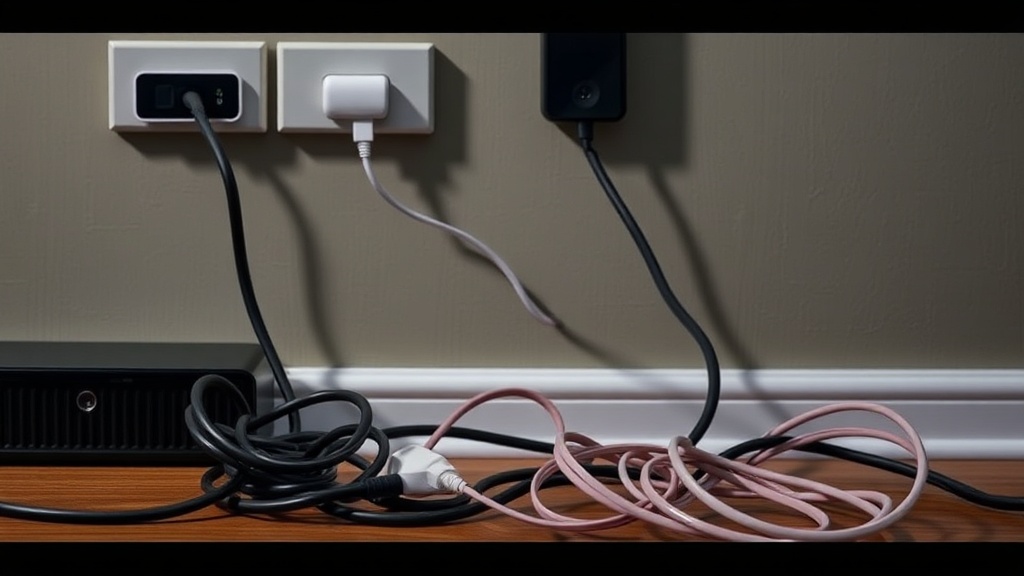
6 Clever Ways to Hide Ugly Cords and Tangled Wires

The Decorative Box Trick
Use Command Hooks for Pathing
Wrap Cables in Fabric Sleeves
The Minimalist Basket Method
Furniture Placement Strategies
Cable Management Boxes
A sleek, mid-century modern sideboard sits against a wall, looking like a piece of art. Then, you look down. A thick, black power cord snakes out from behind it, trailing across a white rug like a stray piece of charcoal. It breaks the line of the furniture, draws the eye to the floor, and makes a high-end setup look messy. This post covers six specific methods to hide those unsightly cables using everything from simple cord covers to custom-built furniture hacks.
Wires aren't just an eyesore; they're a tripping hazard and a dust magnet. If you've ever tried to clean behind a desk and ended up in a tangled web of black plastic, you know the frustration. We're going to fix that by using a bit of geometry and some clever concealment.
How Can I Hide Wires on a White Wall?
You can hide wires on a white wall by using paintable cord covers or by routing them behind furniture. If you don't want to hide them behind a heavy cabinet, a plastic cord raceway is your best bet. These are long, rectangular channels that stick directly to the wall. The trick is to match the color exactly or, better yet, paint them. If you use a brand like D-Line cord raceways, you can actually paint the cover with the same latex paint used on your walls. It makes the plastic disappear into the vertical plane.
When I was designing office layouts in my previous life, we rarely talked about the "aesthetic of the outlet." We just ignored it. But in a home, that white plastic rectangle and the black cord sticking out of it can ruin a room's vibe. If you're using a raceway, don't just slap it on. Use a level. A crooked cord cover is even more distracting than a bare wire because it screams "unprofessional."
If you want a more permanent solution, consider installing a way to route cables through the baseboard. This involves cutting a small channel into the wall or using a hollowed-out baseboard. It's a bigger job, but it's the gold standard for a clean look.
The "Invisible" Method: Paint and Texture
If you aren't ready to tear into your drywall, try these quick fixes:
- Color Matching: Buy a small sample pot of your wall paint and paint the cord cover.
- Command Strips: Use adhesive hooks to run a cord along the top of a door frame where it's less visible.
- Decorative Trims: Add a piece of crown molding or a picture rail to hide the path of the wire.
What Is the Best Way to Hide Desktop Cables?
The best way to hide desktop cables is to use an under-desk cable management tray or a specialized cable box. Most modern desks are just flat surfaces with nothing to stop the wires from falling into a heap on the floor. A tray, like those from IKEA, screws into the underside of the desk and holds your power strip and all those bulky adapters. This keeps the "spaghetti" off the floor and tucked away in a hidden compartment.
I've seen people try to use zip ties to bunch wires together, but that's a mistake. If you ever need to move your monitor or unplug a laptop, you'll be fighting those ties for twenty minutes. Use Velcro strips instead. They are reusable, much more forgiving, and don't pinch the wires. It's a small detail, but it makes a massive difference in how much you'll enjoy your workspace.
| Method | Difficulty | Best For | Cost |
|---|---|---|---|
| Cable Box | Very Low | Power strips & bulky bricks | $ |
| Under-Desk Tray | Medium | Clean desktop setups | $$ |
| Cable Sleeves | Low | Bundling multiple wires | $ |
| Wall Raceways | Medium | Wall-mounted electronics | $ |
One thing to watch out for: heat. Don't shove a bunch of high-voltage power bricks into a tiny, enclosed box without checking for airflow. Electronics need to breathe. If you're hiding a gaming PC or a heavy-duty printer, ensure your solution doesn't create a fire hazard by trapping heat.
How Do You Hide Wires Behind a TV?
To hide wires behind a TV, you should use an in-wall cable management kit or a slim-profile cord cover. If you have a mounted TV, the wires often hang down from the bracket, which looks terrible. An in-wall kit allows you to run low-voltage wires through the wall itself, making it look like the TV is floating without any visible connections. This is a more permanent structural change, but it's the cleanest look possible.
If you're renting and can't drill into the walls, don't panic. You can use a "cord concealment kit" that sticks to the wall. These often come with a decorative cover that can be styled to look like a piece of trim. If you're working with a wooden surface, you might even be able to use a decorative wooden slat wall to hide the wires behind the texture. This is a common trick in high-end interior design—using texture to mask utility.
If you're working on a budget, a simple cable sleeve can work wonders. These are flexible tubes that gather all the wires coming out of your TV into one single, neat "trunk." It looks much more intentional than five different wires dangling everywhere. It's a simple way to turn chaos into a single, organized line.
The "Furniture Hack" Approach
Sometimes, the best way to hide a wire is to make it part of the furniture. If you have a lamp or a device that needs a cord, place it behind a larger object. For example, if you have a floor lamp, run the cord behind a heavy plant or a large decorative basket. This uses the physical volume of the object to block the line of sight.
Can I Hide Wires with Decorative Items?
Yes, you can hide wires by using decorative items like books, plants, or even art. This is a classic "hide in plain sight" technique. For example, a stack of heavy coffee table books can easily hide a power brick or a small cord transition. A large, leafy plant like a Monstera or a Ficus can act as a natural screen for a messy corner of wires. It's not just about hiding the mess; it's about replacing the mess with something beautiful.
I love using sculptural elements to mask utility. If you have a long, horizontal cord running across a low wall, place a long, low bookshelf or a series of decorative trays in front of it. It creates layers in the room, which adds depth, while also serving a practical purpose. It's a way to turn a problem into a design feature.
A quick tip for those using art to hide wires: if you're hanging a canvas, you can actually tape the wire to the back of the frame. This keeps the cord from dangling below the bottom edge of the painting. It's a small touch that makes a huge impact on how "finished" a room feels.
How Do I Organize Cables in a Living Room?
Organizing living room cables requires a combination of grouping and concealment. Start by grouping all the wires from your media console into a single cable sleeve. Once they are bundled, use a cable box to hide the power strip and the excess length of the wires. This prevents the "spaghetti" look on the floor. If you have a media center with many components, consider a cabinet with a hollow back or a dedicated cable management compartment.
Think about the "sightlines" of your room. If you're sitting on the sofa, where is the first place your eyes land? If it's on a pile of wires under the TV stand, you need to act. A simple basket placed under the media console can hide everything. Just make sure the basket is breathable so your electronics don't overheat. This is a great way to add texture to the room while solving a functional problem.
If you're feeling ambitious, you can build a small wooden box to house your electronics. This is a project that requires a bit of woodworking, but it's incredibly satisfying. You can use scrap wood from a previous project—perhaps one of those pieces you used to reinforce an old dresser—to create a custom enclosure that matches your furniture perfectly.
A Quick Checklist for Success:
- Label everything: Use a label maker or even a piece of masking tape to mark which cord belongs to which device.
- Check for tension: Ensure no wires are being pulled tight; this can damage the internal wiring over time.
- Test for heat: After hiding your cables, feel the area to ensure there's no excessive heat buildup.
- Use the right tools: Don't use duct tape; it leaves a sticky residue that's a nightmare to clean off later.
The goal isn't just to hide the wires; it's to make the room feel intentional. When we leave wires exposed, we're telling the world that the work isn't finished. But when we take the time to manage them, the entire room feels more cohesive and designed. It's the difference between a room that looks "lived-in" and a room that looks "put together."