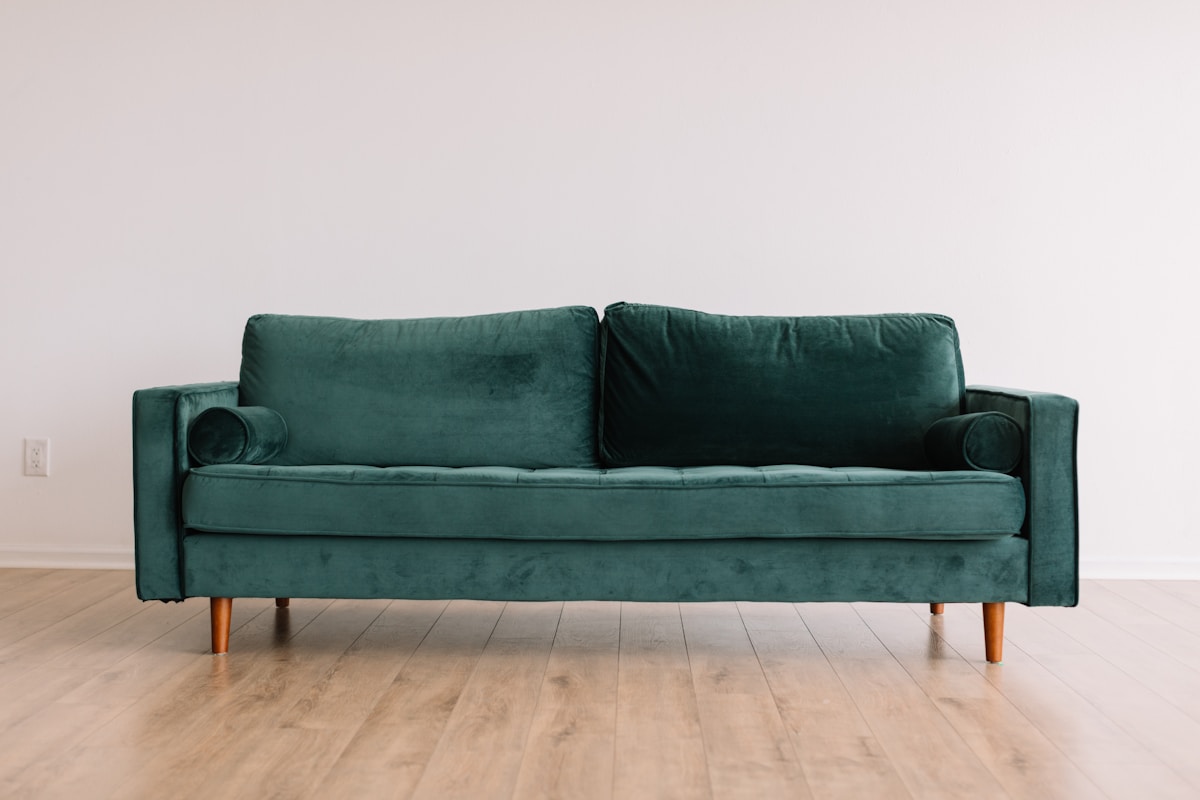
The Curved Furniture Deception: Why Your 'Organic Shape' Sofa is Lying to You

Every design outlet is shouting about "curved silhouettes" and "organic shapes" for 2025. They're calling it a "return to softness," a rejection of the boxy minimalism that's dominated for a decade. And sure — curves feel good. They guide the eye, they welcome the body, they break up the rigid geometry of a room.
But here's what nobody's talking about: Most of the curved furniture you're seeing isn't built. It's upholstered.
And there's a massive difference between the two.
The Two Types of Curves (And Why Only One Deserves Your Money)
When you see a "curved" sofa at West Elm or CB2, what you're actually looking at is a plywood frame wrapped in high-density foam and then buried under fabric. The "curve" is a styling choice, not a structural one. The frame inside is still angular, still joined at 90 degrees, still using the same pocket screws and corner blocks as every other disposable sofa. They've just spent extra on foam sculpting to fool your eye.
This is the Upholstery Curve — a surface-level aesthetic applied to a fundamentally rigid structure. It costs about $40 more in foam and labor to create than a straight sofa. But they'll charge you $800 more because "organic shapes are trending."
Then there's the Structural Curve — the bent lamination, the steam-bent solid wood, the compound joinery that makes the curve load-bearing and intentional. This is Thonet chair territory. This is the Eames Lounge. This is what happens when a craftsperson understands that a curve isn't a shape you add — it's a geometry you build.
The Structural Curve requires:
- Bent lamination (thin strips glued in a form, creating a curve through lamination pressure)
- Steam bending (solid wood heated to cellular plasticity, then shaped and dried)
- Kerf bending (strategic cuts on the inside radius that allow a board to flex without breaking)
- Compound joinery (mortise-and-tenon connections that follow the curve's radius)
The Upholstery Curve requires:
- A plywood frame
- More foam
- A marketing team that discovered 70s design blogs
The Design Math: Why Curves Actually Work
I'm not anti-curve. Curves are powerful design tools — when they're real. The 60-30-10 rule I preach about texture applies to geometry too: 60% rectilinear foundation (your walls, your primary furniture), 30% softened edges (curved accents, rounded corners), 10% organic punctuation (one statement piece with true structural curves).
The problem is that fast furniture has inverted this ratio. They're selling you 60% "organic shape" sofas that are structurally rectilinear, creating visual confusion. Your eye registers the curve, but your proprioception registers the rigid frame beneath. It's design gaslighting.
A true curved piece — a steam-bent walnut chair, a laminated white oak bench — becomes the 10% punctuation that makes the whole room feel intentional. It doesn't compete with your straight-lined sofa; it elevates it.
The Fast Furniture Shortcut You Can Spot
Here's how to tell if that "curved" piece at the showroom is built or upholstered:
1. Check the base. If the legs or the bottom rail is straight while the top is curved, it's upholstery. Real curved furniture curves on all planes — the base follows the seat follows the back.
2. Feel the frame. Press into the "curve" through the fabric. If you feel corners and flat planes beneath, you're touching foam over plywood. If the resistance is consistent across the curve, you might be dealing with laminated wood.
3. Look for joinery evidence. On exposed wood curves (chair arms, table aprons), look for glue lines on the inside radius — evidence of bent lamination. On solid bends, look for grain that follows the curve (good) vs. grain that cuts across it (bad — that board will snap).
4. Check the weight. A curved laminated chair weighs significantly more than a foam-sculpted equivalent. The wood density is real. The structure is real.
What I'd Build Instead
If you want curves in your space, skip the $2,400 "organic shape" sofa that's just foam over particleboard. Here's the Design Math for a better approach:
Keep your rectilinear foundation. Your primary seating should be straight, well-joined, and built to last. This is where you invest in 8-way hand-tied springs and hardwood frames.
Add one true curved statement. Hunt for a vintage Thonet-style bentwood chair (they're everywhere for $60-120 if you're patient). Or build a simple laminated white oak bench using a basic bending form and Titebond III. Total material cost: ~$85. Time: one weekend.
Use soft geometry as texture. Round pillows, curved ceramics, arched mirrors — these give you the "organic" feel without compromising structural integrity.
The Mistake I Made (So You Don't Have To)
Last year, I tried to build a curved headboard using the upholstery method — plywood frame, foam, fabric. I thought I was being clever, saving time. Within three months, the foam compressed unevenly and the "curve" looked like a sad lumpy potato. I had to strip it, build a proper laminated form, and start over.
The lesson: If you're faking the structure, you're faking the design. Curves aren't just shapes. They're engineering challenges. And when you solve them correctly — with steam, glue, and pressure — you get something that lasts generations. When you fake them with foam, you get something that lasts until the next trend cycle.
Let's Get Into the Sawdust
If you want to build a real curved piece, start small. A laminated side table apron. A steam-bent plant stand. Buy a $30 garment steamer and practice bending 1/4" white oak strips. Learn how wood behaves when it's hot and wet. That's where the actual skill lives — not in buying a better-shaped sofa, but in understanding why the curve holds.
The 2025 trend pieces will be landfill by 2028. But a steam-bent chair you build yourself? That's not furniture. That's education.
— Sloane
The Cost Ledger: DIY Curved Bench vs. "Organic Shape" Store-Bought
| Item | DIY Laminated Bench | Store "Organic" Ottoman |
| White Oak (8/4) | $42.00 | N/A |
| Bending Form Materials | $18.50 (MDF, bolts) | N/A |
| Hardware (figure-8 clips, screws) | $8.25 | N/A |
| Finish (Rubio Monocoat) | $22.00 | N/A |
| Consumables (sandpaper, glue) | $12.40 | N/A |
| TRUE COST | $103.15 | $449.00 - $899.00 |
| Lifespan | 50+ years | 3-5 years (foam compression) |
| Repairable? | Yes (sand, re-finish, re-glue) | No (landfill) |
Note: Prices based on Portland, OR lumber yards (February 2026). Your local costs may vary. Don't forget to factor in the cost of the mistakes you'll make on your first bent lamination. I ruined $23 worth of oak learning my clamping sequence. It's in the ledger.