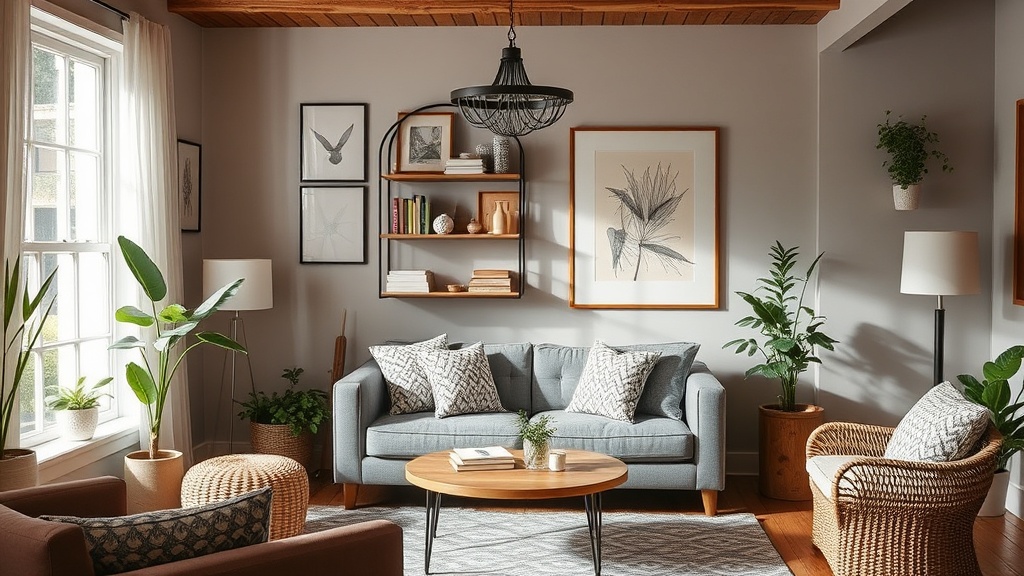
5 Budget-Friendly DIY Projects That Transform Any Room

Paint a Bold Accent Wall
Build Floating Shelves from Reclaimed Wood
Upcycle Old Furniture with Paint and New Hardware
Create a Gallery Wall with Thrifted Frames
Make Custom Throw Pillows from Fabric Remnants
These five projects deliver dramatic room makeovers for under $200 each. No contractor required. No waiting on permits. Just measured cuts, proper materials, and weekends well spent. Whether the goal is storage that actually fits the space or lighting that doesn't look like an afterthought, each project builds real skills while solving real problems. Here's the thing — good design isn't about budget. It's about knowing what to prioritize.
What Are the Best DIY Projects for Beginners on a Budget?
The best starter projects deliver visible results with minimal tool investment and forgiving materials. Think floating shelves (hide imperfect walls), board-and-batten accent walls (forgives uneven studs), and plug-in sconce conversions (no electrical permits). These projects teach measuring, leveling, and finish work — the holy trinity of professional-looking DIY.
Start with the floating shelf. Not the cheap bracket kind that sag after six months. The built-in look using hidden floating shelf brackets from Amazon (about $15 each) and 1x8 poplar boards from Lowe's. The trick? Installing into studs — or using Toggler Snaptoggle bolts for drywall-only mounting. These anchors hold 238 pounds each. That's serious capacity for books, plants, whatever.
Measure the wall. Find studs with a Franklin ProSensor 710 stud finder ($50 — worth every penny). Cut boards to length using a miter box and hand saw if that's what's available. A circular saw speeds things up, but it's not mandatory. Sand to 120 grit, apply two coats of Minwax Polycrylic (dries in two hours — no yellowing), and mount.
How Can You Add Storage Without Built-Ins?
The answer is strategic freestanding pieces that look built-in. IKEA's KALLAX units ($59-89 depending on configuration) become architectural storage with the right trim and placement. The gap between unit and ceiling? That's where crown molding transforms particle board into something that reads custom.
Here's the process: assemble the KALLAX (or similar cube storage). Position against the wall. Cut 1x3 pine to frame the sides and top — this creates the "built-in" shadow line. Install baseboard across the bottom if there's a gap. Then add crown at the top. Caulk every seam. Paint everything the same color as the walls (Benjamin Moore's Chantilly Lace if going bright white; Sherwin-Williams Urbane Bronze for that moody library vibe).
The catch? Standard KALLAX depth is 15 inches. That's not quite deep enough for hanging files or bulky baskets. The KALLAX with door inserts solves this for enclosed storage — or skip IKEA entirely and build a custom console using 2x2 framing and 3/4" birch plywood from Home Depot ($55/sheet). The plywood approach takes one weekend, requires only a drill and circular saw, and yields exactly the dimensions needed for that awkward nook.
| Storage Solution | Cost | Time Required | Tools Needed | Best For |
|---|---|---|---|---|
| IKEA KALLAX with trim | $85-120 | 4-6 hours | Drill, miter saw, nail gun | Renters, quick wins |
| Custom plywood console | $140-180 | 8-12 hours | Circular saw, drill, pocket hole jig | Exact dimensions, longevity |
| Floating shelves (3 @ 4ft) | $75-95 | 3-4 hours | Drill, level, stud finder | Display, tight spaces |
| Vintage dresser rescue | $40-80 | 6-8 hours | Sander, basic hand tools | Character, drawers that glide |
Can You Really Do Your Own Accent Wall?
Yes — and it shouldn't cost more than $100 in materials. The board-and-batten treatment (vertical strips over existing drywall) adds architectural interest without the complexity of shiplap or tile. It works in entryways, bedrooms, dining rooms — anywhere that needs weight and intention.
Materials: 1x3 primed MDF boards (about $1.20 per linear foot), construction adhesive, 1-1/4" finish nails, caulk, and paint. For a standard 8-foot wall, plan on $60-80 in boards plus a gallon of quality paint.
The math matters. Measure wall width and height. Decide on spacing — 12 to 16 inches between vertical boards is standard. (Walls look best with odd numbers of panels, so adjust spacing to make that work.) Use a laser level for the vertical lines. Cut boards to height minus 1/2 inch (baseboard covers the bottom). Top with a horizontal 1x4 cap for that finished edge.
That said — don't skip the caulk. The gap between board and wall is where DIY looks amateur. Run a thin bead of DAP Alex Flex along every edge, tool it smooth with a wet finger, let dry, then paint. The result reads as solid millwork instead of applied trim.
Alternative: The Picture Frame Molding Wall
For more traditional spaces, picture frame molding (four pieces creating rectangular boxes) delivers library-paneled elegance. Use 1x2 pine instead of MDF — it holds paint better and feels more substantial. Install boxes 36 inches from floor to bottom edge (standard chair rail height) or take them to the ceiling for full drama.
Spacing rule: boxes should be 3-4 inches narrower than the space between them. So 24-inch wide boxes with 28 inches between centers. This rhythm feels intentional, not random.
What's the Cheapest Way to Upgrade Lighting?
Hardwired sconces without the hardwiring. The corded-to-conversion method uses plug-in sconces mounted like real fixtures, with cords hidden in the wall using a cord hider kit ($12-18) painted to match. Total cost per fixture: $40-70 versus $200+ for electrician-installed versions.
Source fixtures from Target's Threshold line, IKEA's HEKTAR wall lamps, or Amazon's LALAHOO brass plug-in sconces ($38/pair — surprisingly decent quality). Mount at 66 inches from floor to center of fixture — standard eye level for reading and ambient light.
The install: locate studs. Mark bracket holes. Drill pilot holes. Mount fixture. Run cord down to nearest outlet, securing with cord clips every 12 inches. Hide the cord in a paintable channel or — if feeling ambitious — install an outlet behind the fixture and feed cord through the wall (check local code; this varies by jurisdiction).
Worth noting: color temperature matters more than fixture style. Residential spaces read better at 2700K (warm white) than 3000K+ (office fluorescent). The Philips LED WarmGlow bulbs dim from 2700K to 2200K, mimicking incandescent behavior. They're $8 for a two-pack at Home Depot. Small detail. Huge difference.
How Do You Refresh Furniture Without Stripping It?
Gel stain over existing finish. No sanding through layers of old lacquer. No chemical strippers in the kitchen. Products like General Finishes Gel Stain (Java and Walnut are the workhorse colors) adhere to sealed wood, painted surfaces, even laminate with proper prep.
The process: clean with TSP substitute ($8 at hardware stores). Scuff with 120-grit sandpaper — not to bare wood, just to degloss. Wipe dust. Apply gel stain with a foam brush in thin, even coats. Wait 24 hours between coats. Three coats typically delivers that deep, furniture-store depth. Top with General Finishes High Performance Topcoat (satin sheen hides imperfections; gloss shows them).
A solid wood dresser found on Facebook Marketplace for $40 becomes a $400-looking piece with $25 in materials and a Saturday. The structural respect part? Check the drawer bottoms — replace thin fiberboard with 1/4" plywood if sagging. Lubricate drawer slides with paraffin wax or Blaster Dry Lube with Teflon. Fix the wobble with adjustable furniture feet. These details extend life by decades.
Paint Alternative: Chalk Paint for the Win
Annie Sloan Chalk Paint ($42/quart) gets attention, but Rust-Oleum Chalked Paint ($20/quart at Lowe's) performs nearly as well for half the price. No primer needed on most surfaces. Distress edges with 220-grit after waxing for that Belgian farmhouse look. Or keep it clean and modern with sharp lines and matte finish.
The thing about chalk paint — it forgives everything. Brush marks blend in. Uneven surfaces look intentional. It's the training wheels of furniture refinishing, except the result doesn't look like training wheels. Just don't skip the protective wax or topcoat. Chalk paint without protection marks if you look at it wrong.
Final Project: The Hardware Swap
Cabinets, dressers, doors — new hardware changes everything for $30-80. Matte black pulls from Amazon Basics (10-pack for $22). Brushed brass from Anthropologie's hardware collection ($12-18 each — splurge on one statement piece). Vintage ceramic from Etsy sellers like TheCrookedCottage.
Measurement cheat sheet: cabinet pulls look balanced at 1/3 the width of the drawer. Standard kitchen drawers (24-30 inches) take 6-8 inch pulls. Bathroom vanities (18-21 inches) take 4-5 inch pulls. If replacing knobs with pulls, fill old holes with DAP Plastic Wood, sand flush, touch up paint, then drill new holes using a template (make one from cardboard — mark centers, punch through, use repeatedly).
These five projects — shelving, storage, wall treatments, lighting, and furniture refresh — layer together. The shelf goes on the accent wall. The refinished dresser sits beneath the new sconce. Each skill compounds. That's how rooms transform without transforming budgets.