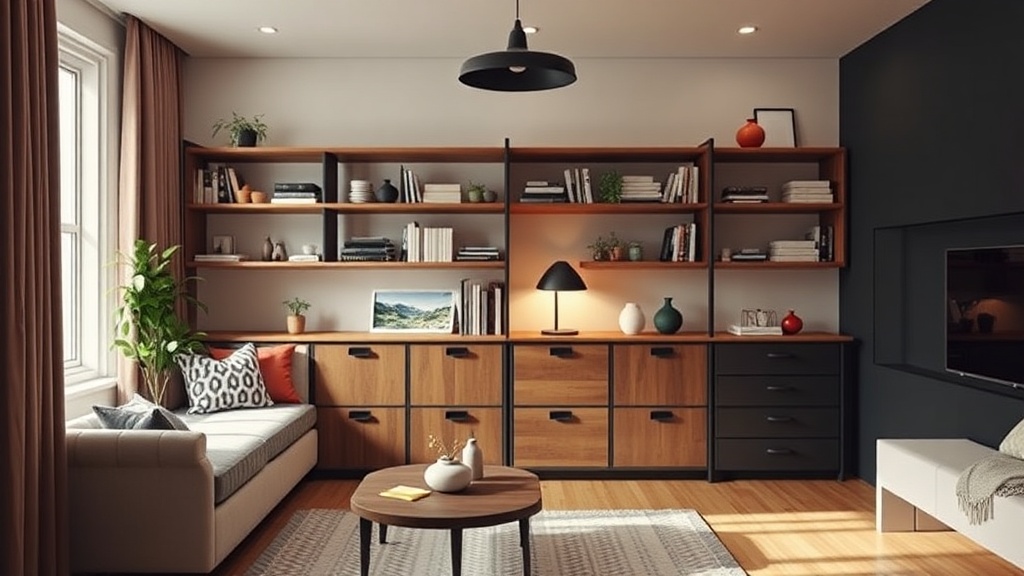
10 Clever Storage Hacks to Maximize Your Small Living Space

Small spaces don't have to feel cramped or cluttered. This post covers ten practical storage solutions that transform tight quarters into functional, beautiful homes—no demolition required. Whether you're working with a studio apartment, a compact guest room, or a tiny home on wheels, these strategies help you reclaim square footage while keeping everything accessible and aesthetically pleasing.
How Do You Create Storage in a Room With No Closets?
You build vertical systems and furniture that works harder. When closet space is nonexistent, every piece of furniture becomes a potential storage opportunity, and walls transform into valuable real estate.
Start with the IVAR shelving system from IKEA—it's modular, affordable (starting around $15 per section), and plays nice with add-ons like cabinets, drawers, and wine racks. The beauty of IVAR lies in its adaptability: configure it tall and narrow for awkward corners, or stretch it wide beneath windows. Paint the pine shelves to match your walls, and suddenly storage disappears into the architecture.
For bedrooms lacking built-ins, consider a storage bed—not the squeaky lift-up platforms from college days, but proper drawer systems like the BRIMNES bed frame from IKEA or higher-end options from West Elm's Mod Upholstered Storage Bed. These integrate four to six drawers into the base, reclaiming the dusty void beneath your mattress. That's roughly 20 cubic feet of storage—enough for off-season clothing, extra bedding, or a small library.
Wall-mounted systems also shine here. Elfa's utility wall (available at The Container Store) uses a simple track-and-bracket system that holds everything from bike hooks to wire baskets. Install one above a desk for office supplies, or run it floor-to-ceiling in an entryway for shoes, bags, and dog leashes. The initial investment runs $200–$400 depending on configuration, but the system grows with your needs.
What Are the Best Vertical Storage Ideas for Small Apartments?
Think beyond bookshelves—pegboards, ceiling-mounted racks, and toe-kick drawers unlock hidden capacity throughout your home. Vertical storage exploits the one dimension small spaces usually have in abundance: height.
The Wall Control pegboard system (available on Amazon and at hardware stores) turns any wall into a customizable command center. Unlike flimsy Masonite boards, these 20-gauge steel panels hold serious weight—think power tools, cast iron skillets, or full paint cans. Mount one in the kitchen for utensils and knives, freeing drawer space for the bulky stuff. In a craft room or garage, it corrals scissors, tape measures, and hardware into visual order.
In kitchens specifically, magnetic knife strips (the Zwilling J.A. Henckels Twin stainless steel bar holds up well) clear counter space while keeping blades accessible. Combine this with a ceiling-mounted pot rack—the Enclume Handcrafted Premier Rack, though pricey at $300+, lasts decades and turns cookware into industrial-chic sculpture.
Here's the thing about vertical storage: it only works if you can actually reach it. Reserve the zone from eye level to six feet high for daily-use items. Above that? Seasonal storage, archival boxes, or decorative objects you're not touching often. Below knee level? Toe-kick drawers—those slim pull-outs beneath base cabinets—add approximately 4 inches of depth across your entire kitchen perimeter. That's enough for baking sheets, cutting boards, or a step stool.
Worth noting: Apartment Therapy maintains an excellent archive of small-space vertical solutions, including renter-friendly options that don't require drilling into landlord-owned drywall.
Can Multifunctional Furniture Really Save Space?
Yes—when it's genuinely dual-purpose, not merely compromised. The best multifunctional pieces perform both jobs excellently, without the jankiness that plagues cheap convertible furniture.
The Resource Furniture Goliath table exemplifies this philosophy. At console size (17 inches deep), it hugs a wall or serves as a desk. Extend it—via a clever butterfly-leaf mechanism—and it seats ten for dinner. At $4,000+, it's an investment, but consider the alternative: a dedicated dining table consuming 30 square feet in a studio apartment year-round, used maybe twice monthly.
For tighter budgets, the Hemnes daybed from IKEA ($449) functions as a sofa, guest bed, and storage unit simultaneously. The three drawers beneath swallow linens, pillows, or a guest's luggage. Styled with textured throws and proper pillows, it reads as intentional furniture—not a futon cop-out.
| Product | Primary Function | Secondary Function | Storage Capacity | Price Range |
|---|---|---|---|---|
| Resource Furniture Goliath | Console table | 10-seat dining table | N/A | $4,000–$5,500 |
| IKEA Hemnes Daybed | Sofa | Guest bed (twin/king) | 3 drawers | $449–$599 |
| Ottoman by CB2 | Seating/footrest | Storage trunk | ~6 cubic feet | $299–$499 |
| West Elm Mid-Century Pop-Up | Coffee table | Desk/dining surface | Lift-top compartment | $599–$799 |
| Wayfair Custom Upholstery Sleeper | Sofa | Queen bed | Optional storage chaise | $1,200–$2,000 |
The catch? Multifunctional furniture often requires assembly, maintenance, and a learning curve. That Goliath table won't extend itself. Before buying, honestly assess whether you'll actually perform the conversion regularly—or if you're buying aspirational functionality that gathers dust (and resentment).
Hidden Storage in Plain Sight
Some of the best storage hacks hide in architectural details you'd never suspect. That hollow space behind your baseboards? It can become a baseboard drawer—a slim pull-out channel for power cables, router equipment, or jewelry. Companies like Baseboarders sell retrofit kits, or you can DIY with a router and some 1×4 pine.
Stair risers present another opportunity. Each step in a standard staircase conceals approximately 1–2 cubic feet of dead space. Convert them to drawers (the StairDrawer system retrofits existing stairs) and you've gained the equivalent of a small closet without sacrificing floor space. Perfect for shoes, pet supplies, or tools you don't need daily.
Even windowsills can work harder. A window seat with integrated storage—built from 2×4 framing and plywood—creates a reading nook while swallowing everything from board games to winter boots. Top it with a custom cushion from Sunbrella fabric (stain-resistant, worth the upcharge) and you've added functional seating plus hidden capacity.
How Do You Organize a Small Closet to Fit More?
You rethink the vertical plane and eliminate single-purpose hangers. Most closets use only 50% of their available cubic footage—everything happens at eye level, with acres of wasted space above rods and below hanging clothes.
Double your hanging capacity with a tiered rod system. Install a second rod halfway between the existing one and the floor—this works spectacularly for shirts, blouses, and folded pants. Reserve the upper rod for longer items (dresses, coats) and the lower for anything that clears the ground. The ClosetMaid SuiteSymphony system accommodates this configuration with pre-drided standards and adjustable brackets.
For the floor zone, skip wire baskets that snag sweaters. The Container Store's Clear Stackable Sweater Boxes slide under hanging clothes like drawers, protecting items from dust while keeping them visible. Alternatively, a shoe ottoman—a padded bench with interior compartments—provides seating while concealing 12–16 pairs.
Door-mounted storage transforms the back of your closet into valuable real estate. The SimpleHouseware Over Door Organizer ($25 on Amazon) hangs from standard hinges without installation, offering clear pockets for accessories, shoes, or cleaning supplies. In a pantry application, this same principle holds spice jars, snack bags, and small appliances—freeing shelf space for the big stuff.
That said, don't over-organize. The goal isn't Pinterest perfection; it's functional accessibility. If retrieving a sweater requires unstacking three labeled bins, the system has failed. Keep daily-use items visible and within arm's reach. Archive seasonal or occasional items higher, deeper, or behind.
Bathroom Storage That Doesn't Look Like a Pharmacy
Bathrooms in small homes often suffer from "pharmacy chic"—everything exposed on wire racks, nothing matching, daily essentials competing for sink-adjacent territory. The fix? Recessed storage and furniture that belongs in a living room, not a locker room.
A medicine cabinet recessed into the wall (the Kohler Verdera line offers mirrored, lighted options) adds 4–6 inches of depth without projecting into your face as you brush your teeth. For rentals where cutting into drywall isn't possible, a floating vanity with drawer organizers creates the illusion of recessed storage while actually providing more.
The space above toilets—often occupied by those wobbly wire racks—deserves better. A floating shelf unit (try the CB2 Helix series) anchors to wall studs and holds baskets, rolled towels, or plants without the visual weight of a cabinet. Alternatively, a ladder-style towel rack leans against the wall, providing six rungs of hanging space that reads as design, not storage solution.
For under-sink chaos, the madesmart Expandable Under Sink Organizer wraps around plumbing while creating two tiers of accessible storage. Pair it with simplehuman's tension caddy—a shower organizer that actually stays put on tile—and you've reclaimed an entire cabinet's worth of space.
The Final Hack: Living With Less
Here's the uncomfortable truth underlying every storage solution: you can't organize excess. The most effective small-space strategy isn't buying better containers—it's owning fewer things that demand containment.
Before implementing any of these hacks, conduct an honest audit. The KonMari method (yes, Marie Kondo's approach) works because it forces decisions: does this item serve your current life, or an imagined future one? That said, you don't need to fold socks into origami. Simply categorizing belongings into "daily," "weekly," "monthly," and "never" reveals what actually requires accessible storage versus what can live in archived boxes—or leave entirely.
Small spaces have a magical way of exposing the gap between aspiration and reality. You can't hide clutter in a studio apartment. Every object must earn its keep, visually and functionally. The storage hacks above don't just organize your stuff—they force intentionality about what deserves space in your life.
Ready to start building? Family Handyman offers detailed project plans for many of these built-in solutions, complete with material lists and cut diagrams. Grab a tape measure, sketch your space, and remember: in small-space design, every inch is a conversation between what you need and where you live.