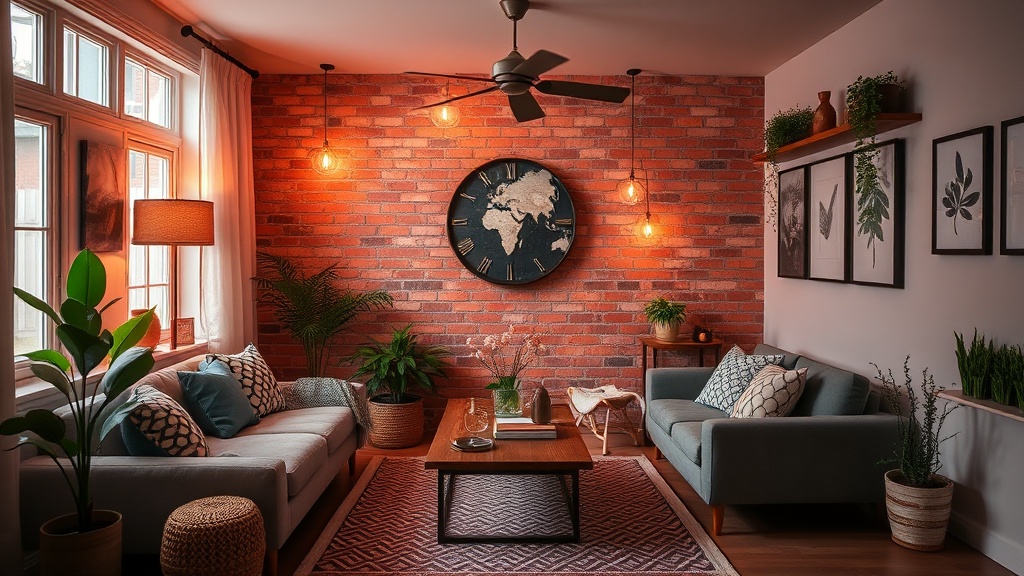
10 Budget-Friendly DIY Upgrades That Transform Your Space

Paint a Bold Accent Wall
Upgrade Cabinet Hardware
Create a Gallery Wall with Thrifted Frames
Install Peel-and-Stick Backsplash Tiles
Upcycle Old Furniture with Paint
Why These 10 Upgrades Deliver Maximum Impact for Minimum Investment
This post covers ten specific DIY projects that cost under $300 each but deliver visual impact equivalent to professional renovations costing thousands. Each upgrade includes real material costs, timing estimates, and the exact tools needed—no vague promises, no "it depends." Whether preparing a rental for market or refreshing a long-term home, these structural and aesthetic improvements leverage architectural principles without the architectural budget.
1. Cabinet Refinishing with Bonding Primer
Replacing kitchen cabinets averages $5,000 to $15,000. Refinishing them with proper technique costs $80 to $150 total.
Materials: INSL-X Cabinet Coat enamel ($45/gallon), Zinsser Bulls Eye 1-2-3 primer ($25/quart), 220-grit sandpaper ($8), quality angled brush ($18).
The architectural secret: Cabinet Coat contains urethane particles that self-level, eliminating brush marks without spraying. Clean cabinets with TSP substitute, sand lightly to degloss, apply one bonding primer coat, then two finish coats. Drying time between coats: 4 hours. Total project time: 3 days including drying.
Data point: A 2019 Cost vs. Value report showed cabinet refinishing recoups 80% of costs at resale, compared to 54% for full cabinet replacement.
2. Peel-and-Stick Tile Backsplash with Grout
Traditional subway tile installation runs $15 to $30 per square foot installed. Quality peel-and-stick options with real grout cost $6 to $8 per square foot, fully DIY.
Specific product: Smart Tiles Milano Avorio ($9.99 per 11.5" x 9" sheet at Home Depot). For a standard 30-square-foot backsplash behind a stove: 35 sheets ($350) plus SimpleGrout Pre-Mixed Grout ($22) and a grout float ($12).
Pro technique: These aren't contact-paper decals—they're 1/8-inch thick gel tiles with dimension. Install on clean, primed drywall or existing tile. The grout lines create shadow lines identical to ceramic tile. A standard kitchen backsplash takes one weekend.
Warning: Avoid cheap vinyl tiles without dimension. They read as "renter temporary" and reduce perceived value.
3. Hardware Swaps with Proper Spacing
Knobs and pulls function as jewelry for cabinets. The mistake most DIYers make: improper center-to-center spacing on drawers.
The math: Drawer pulls should sit at the golden ratio point—0.618 times the drawer width from the left edge. For a 36-inch drawer: 36 × 0.618 = 22.2 inches from left edge to pull center.
Specific sources: Amazon Basics bar pulls (10-pack for $24.99), Emtek knobs at Build.com ($8-$14 each), or vintage pulls at Habitat ReStores ($1-$3 each).
Drill template: Create a cardboard jig marking standard placements. For base cabinets, pulls sit 2.5 inches from the top edge. For wall cabinets, pulls sit 2.5 inches from the bottom edge. Consistent placement reads as custom; inconsistent placement reads as amateur.
4. Ceiling-Mounted Lighting Without Electrical Work
Swapping a builder-grade flush mount for a semi-flush fixture transforms room proportions. A standard 8-foot ceiling with a 4-inch flush mount feels low. The same ceiling with a 12-inch semi-flush drum shade draws eyes upward.
Specific fixtures: Progress Lighting Replay semi-flush mount ($89 at Lowe's), Kichler Marita drum shade ($129). Both use standard junction boxes—no electrician required.
Installation data: Turn breaker off, disconnect old fixture (black to black, white to white, ground to ground), install mounting bracket, hang new fixture. Time: 25 minutes per fixture. Tool list: voltage tester ($15), wire strippers ($12), screwdriver.
Lumens matter more than watts: Aim for 3,000-4,000 lumens for dining areas, 2,000-3,000 for bedrooms. LED bulbs rated 2700K-3000K provide warm light that flatters skin tones and wood finishes.
5. Crown Molding with Coping Joints
Crown molding creates value through implied structure—it visually "caps" the wall-to-ceiling transition. The professional secret isn't mitered corners; it's coping.
Materials for 12×14 living room: 52 linear feet of 3.25-inch colonial crown ($1.20/LF at Menards = $62.40), construction adhesive ($8), 18-gauge brad nails ($12), wood filler ($6).
The coping technique: Cut one end of a corner piece at 45 degrees. Then use a coping saw to back-cut along the profile line, removing the excess. The coped end fits perfectly against the adjacent piece, even if the wall corner isn't exactly 90 degrees (and it never is).
Tool rental option: 18-gauge brad nailer from Home Depot ($38/day) versus purchase ($129). For one room, rent. For whole-house installation, buy.
6. Gallery Walls with Consistent Spacing
Gallery walls fail when spacing is inconsistent or frames compete. The architectural approach: treat the entire grouping as one rectangle.
Formula: Total wall width × 0.6 = optimal gallery width. Center this rectangle at 57 inches from floor to center (average human eye level). Maintain 2-inch spacing between all frames.
Budget breakdown: IKEA RIBBA frames ($9.99-$19.99), Command Picture Hanging Strips for rentals ($12/pack holds 12 pounds), or OOK professional hangers for permanent installation ($8).
Specific layout: The "salon style" grid uses uniform frames (easiest). The "organic cluster" uses varied frames with consistent spacing (harder). For first-timers: buy 9 identical 8×10 frames, arrange in a 3×3 grid with 2-inch gaps. Total cost: $90. Impact: reads as intentional design, not accumulated clutter.
7. Floating Shelves with Hidden Brackets
Particleboard floating shelves from big-box stores sag under weight. Proper floating shelves use solid wood and hidden brackets rated for actual loads.
Specific system: Blind shelf supports from Rockler Woodworking ($14.99/pair, rated for 40 pounds). Pair with 1.5-inch thick white oak or maple boards cut to length.
Installation specs: Locate studs with a stud finder ($25). Drill 1/2-inch holes into shelf back, 16 inches on center to match stud spacing. Brackets insert 4 inches into studs, leaving zero visible hardware.
Cost comparison: CB2 walnut floating shelf (24-inch): $79. DIY version using Rockler brackets + wood from lumber yard: $42. The DIY version holds more weight and matches exact dimensions needed.
8. Accent Wall with Stencil and Matte Paint
Wallpaper installation costs $3 to $7 per square foot for labor alone. Stenciling costs $0.50 per square foot in materials, with results nearly indistinguishable from high-end wallpaper.
Specific products: Cutting Edge Stencils "Torus" pattern ($44), Benjamin Moore Regal Select matte base coat ($52/gallon covers 400 sq ft), stencil paint in contrasting shade ($24/quart).
Technique: Base coat the wall, let dry 24 hours. Tape stencil with painter's tape, roll excess paint off on paper towels (dry-brush technique), apply with foam roller using minimal pressure. Move stencil, align registration marks, repeat.
Time investment: One 10×12 accent wall takes 6 hours total. Cost: $120 versus $800+ for professional wallpaper installation of equivalent coverage.
9. Faucet Replacement with Supply Line Upgrades
New faucets transform kitchen and bath aesthetics instantly. The invisible upgrade: replacing corroded supply lines simultaneously.
Specific faucet: Delta Leland kitchen faucet ($178 at Home Depot). Pull-down spray, magnetic docking, SpotShield finish resists water marks.
Supply line specs: 3/8-inch compression × 1/2-inch FIP, 20-inch length braided stainless ($12 each). Replace both hot and cold lines during installation. Old copper or rubber lines corrode internally; new lines prevent leaks that destroy cabinets.
Tool list: Basin wrench ($18—essential for reaching mounting nuts), adjustable wrench, Teflon tape ($2). Total installation time: 45 minutes for kitchen faucet, 30 minutes for bath.
10. Custom Storage Built from Dimensional Lumber
Prefab closet systems cost $300 to $800 per linear foot installed. Building custom shelving from 3/4-inch plywood and 1×2 trim costs $40 per linear foot.
Specific build: 8-foot closet system using two sheets birch plywood ($65 each), 1×2 poplar for edge banding ($24), shelf pins for adjustable shelving ($8), white primer/paint ($35).
Construction sequence: Rip plywood into 15-inch deep shelves using circular saw with guide ($35 for Kreg Rip-Cut). Edge band with iron-on veneer tape ($12) or 1×2 trim nailed flush. Install 1×2 cleats along back and side walls, resting shelves on top. Paint everything before installation.
Capacity comparison: 3/4-inch plywood spans 36 inches without sagging under 50-pound loads. MDF shelving from IKEA sags at 24 inches under similar loads. Real materials deliver real performance.
The Structural Approach to Budget Design
These upgrades share a principle: respect the existing structure while improving the finish layer. Cabinets stay, surfaces change. Walls stay, moldings cap them. Ceilings stay, lighting draws eyes upward.
The total investment for all ten projects: approximately $1,850. The equivalent professional renovation cost: $15,000 to $25,000. The architectural training applies in selecting proper materials and precise execution—not in spending more money.
Start with the upgrade that addresses the biggest visual deficit in the space. Measure twice, order once, and build confidence with each completed project.